Links
Important Dates
Submission Deadline
April 15, 2027
Notification of Acceptance
May 15, 2027
Camera Ready Submission
June 15, 2027
Registration Deadline
June 15, 2027
Contact Us
Conference Secretory
Email: icdis@acamail.org
Keynote Speakers
-
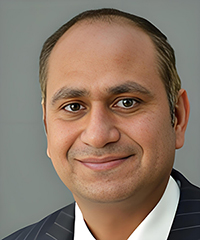
Mohan Lal Kolhe
Professor, University of Agder, Norway.
Research field: Sustainable Electrical Energy Systems, Smart Grid and Grid Integration of Renewable Energy Systems, Electric Vehicles, Hydrogen Energy Technologies, Solar Photovoltaic and Wind Energy Systems Engineering, Electro-Mechanical-Chemical Energy Conversion and Management, Power System Dynamics, Electrical Machines, Energy Conversion and Management, Techno-Economics of Energy Systems.
Prof. Dr. Mohan Lal Kolhe is a full professor in smart grid and renewable energy at the Faculty of Engineering and Science of the University of Agder (Norway). He is a leading renewable energy technologist with three decades of academic experience at the international level and previously held academic positions at the world's prestigious universities, e.g., University College London (UK / Australia), University of Dundee (UK); University of Jyvaskyla (Finland); Hydrogen Research Institute, QC (Canada); etc. In addition, he was a member of the Government of South Australia’s first Renewable Energy Board (2009-2011) and worked on developing renewable energy policies. Professor Kolhe is an expert evaluator of many prestigious international research councils (e.g., European Commission: Erasmus+ Higher Education – International Capacity Building, Royal Society London (UK), Engineering and Physical Sciences Research Council (EPSRC UK), Cyprus Research Foundation, etc.). In addition, many international organizations have invited him to deliver keynote addresses, expert lectures, workshops, etc. He has also been a member of many academic promotional committees. Professor Kolhe has been successful in obtaining competitive research funding from prestigious research bodies (such as the Norwegian Research Council, EU, EPSRC, BBSRC, NRP, etc.) for his work on sustainable energy systems. His work on energy systems and electrical & electronic engineering has been recognised in the top 2% of scientists worldwide consistently from 2020 to 2023, according to Stanford University matrices based on Elsevier data. His top 10 publications have received an average of more than 200 citations each, making him an acknowledged pioneer in his profession on a global scale.
-
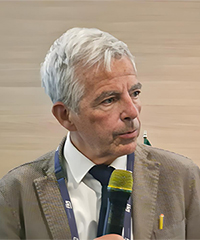
Luigi Fortuna
Professor, STM Lab+, Italy.
Research field: System Theory, Control Systems, Nonlinear Dynamics, Complex Systems, Robust Control, Chaos, Cellular Neural Networks, Soft Computing, Bio-inspired Robotics, Model Order Reduction.
Luigi Fortuna (Life Fellow, IEEE; Fellow, IEICE & AIAA) received the degree in Electrical Engineering (cum laude) from the University of Catania, Italy, in 1977. He became a Full Professor of System Theory in 1994 and served as the Dean of the Engineering Faculty at the University of Catania (2005–2012). He is currently with the University of Palermo. He has authored over 760 scientific publications and is co-author of 24 books. He has coordinated numerous EU and national research projects (e.g., FIRB, PRIN, CLWAR) and collaborated with leading institutions including JET (UK), ENEA, the Italian Space Agency (ASI), and EURATOM/Eurofusion. His research spans control theory, nonlinear circuits and systems, complex networks, and bio-inspired robotics. Prof. Fortuna holds 11 patents and has held key editorial roles (e.g., Editor-in-Chief of book series by Springer and World Scientific). According to Scopus, his work has received over 13,700 citations with an H-index of 67 (as of 2025). He remains a leading figure in systems and control engineering.
-
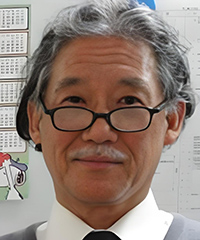
Yoshiaki Daimon Hagiwara
Professor, Sojo University, Japan.
Research field: ADC, DRAM and High-speed Cache SRAM Buffer Memory Chips, Micro Controller Chips, Semiconductor Chips for AIPS Robotics, Solar Cell Energy Solutions.
Hagiwara graduated California Institute of Technology (Caltech) in Pasadena, California in USA with BS71 with honor, MS1972 and PhD1975 with the major in Electric Engineering and with the minor in Physics. In February1975, he joined Sony in Tokyo, Japan and was engaged first in the early development of Sony image sensors. While working for Sony from 1975 to 2008, he was engaged in the early developments of image sensor and the digital camera chip set including the ADC, DRAM and high-speed Cache SRAM buffer memory chips and micro controller chips. Before retiring from Sony at the end of July 2008, he was engaged in the PS2 and PS3 chip set developments. He was invited to talk at CCD1979, ECS1980, ESSCIRC2001, ESSCIRC2008 and ISSCC2013. While working at Sony until July 2008, he was serving as a visiting professor at Caltech since 1998 to 1999 in the office of Prof. C. A. Mead in Electrical Engineering department and also in the offices of Prof. T.C. McGill and Prof. James McCaldin in Applied Physics department. He was also serving as a visiting professor since 2003 till 2006 in the office of Prof. Haruo Kobayashi in Electrical Engineering department at Gunma University in Japan.
In 1992 he also served as a member of JEDEC memory standardization committee and also as the IEC TC47 technical committee chair of the international standard committee (IEC). He also served as the international program chair and an operational committee member in IEEE EDS sponsored ICMTS conferences, IEEE ISSCC conferences for which he served as the ISSCC Asian Committee chair and also as the ISSCC international technical program committee (ITC) chair in series. He was also a member in the program committee (PC) and the operational committee (OC) and is now serving in the advisory committee (AC) of the IEEE Cool Chips conferences in series. He also taught from 2020 to 2021 the AIPS, Artificial Intelligent Partner System for AI robotics at Kanagawa Institute of Technology in Japan.
In 2008 he founded and worked as the president of Artificial Intelligent Partner System, AIPS, a nonprofit research organization, NPO, registered by Kanagawa prefecture government in Japan. Since 2017, he is serving as an operational committee (OC) member and also as a technical program committee (PC) member of Department of Education in Society of Semiconductor Industry Specialists (SSIS) in Japan. Since 2009 till 2017, he taught graduate and undergraduate students as a full professor of Information and Communication Science department and is still now serving as a specially appointed professor at the president office in Sojo University in Kumamoto-city, Japan working for developments of semiconductor chips for AIPS robotics and Solar Cell energy solutions. He is Caltech Distinguished Alumni, IEEE Life Fellow and AAIA Fellow.
-
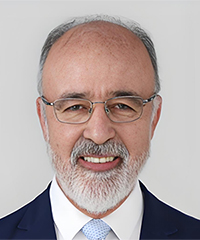
Mohamad Sawan
Professor, Westlake University, China.
Research field: Smart Medical Devices Including Brain-Computer Interface, Biosensors and Actuators, Which Involve Microelectronics, Microfluidics, Nanophotonics, Integrated Circuits, Microfabrication, Energy Harvesting, Signal Processing, Wireless Communication, Microsystem Integration, Assembly, Packaging, and In Vivo Validation.
Mohamad Sawan (FRSC, FCAE, FEIC, Life Fellow IEEE) is a leading scientist in smart medical devices, known for his pioneering work in implantable and wearable microsystems. He received his Ph.D. in Electrical Engineering from the University of Sherbrooke in 1990 and held professor positions at Polytechnique Montréal from 1991 to 2018. From 2001 to 2015, he held a Tier 1 Canada Research Chair in Smart Medical Devices. He joined Westlake University in 2018 as a Chair Professor, where he founded and directs the Center of Excellence in Biomedical Research on Advanced Integrated-on-chips Neurotechnologies (CenBRAIN Neurotech). Prof. Sawan has held key editorial roles, including Editor-in-Chief of IEEE Transactions on Biomedical Circuits and Systems and founder/Editor-in-Chief of the ELSP Neuroelectronics Journal. He is also the founder of the IEEE NEWCAS conference and co-founder of IEEE-BioCAS and IEEE-AICAS. His research focuses on brain-computer interfaces, biosensors, actuators, and integrated microsystems for medical applications. He has published over 1,000 papers, 25 monographs, and received over 19,600 citations with an H-index of 67.
-

Anton Dianov
Professor, Wenzhou University, China.
Research field: Permanent Magnet Synchronous Motor, Inverter,Control System, Power Loss, Stator Current, Stator Winding, Flux Linkage, Heat Transfer, Motor Current, Motor Operation, Motor Parameters, Current Control.
Anton Dianov (Senior Member, IEEE) received the B.Sc. (Hons.), M.Sc. (Hons.), and Ph.D. degrees in electrical engineering from the National Research University "Moscow Power Engineering Institute", Moscow, Russia, in 2000, 2002, and 2005, respectively.,From 2005 to 2021, he was a Senior Engineer with Samsung Electronics, where he developed motor drives for home appliances. He is the author of more than 50 publications in the referring journals and conferences on electrical drives and motor control and several patents on control algorithms for electrical drives and power electronics. His research interests include electrical drives, sensorless, and advanced control algorithms. He is a Member of editorial board of several journals including IEEE Open Journal of the Industrial Electronics Society and IEEE Journal of Emerging and Selected Topics in Power Electronics.,Dr. Dianov was awarded with several personal scholarships including the scholarship form the President of Russian Federation and Wenzhou Ouyue outstanding high talent program award.
-
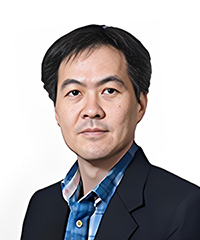
Tee Hui Teo
Senior Lecturer, Singapore University of Technology and Design, Singapore.
Research field: Integrated Circuits, Artificial Intelligence, IC Design, Device Characterization and Modelling.
Tee Hui Teo graduated with Master of Engineering and Ph.D. from National University of Singapore and Nanyang Technological University in 2000 and 2009 respectively in Electrical & Electronic Engineering. Since 1996, he was with Sharp, ST-Microelectronics, Intelligent Micro-Devices (Matsushita), and etc. as a senior Integrated Circuits (IC) designer, prior to joining Institute of Microelectronics, Agency for Science, Technology and Research (A*STAR), Singapore as principal investigator in advanced IC design R&D. In 2010, he joined education sector for setting up both Analog and Digital IC design courses and laboratories for Technical University of Munich, Asia. He is currently with Singapore University of Technology and Design. T. Hui is a Senior Member of IEEE, and Fellow of IES (Institution of Engineers Singapore). He has served as General Chair of several international academic conferences, as well as Editorial Board Member and Guest Editor of several international journals.
-
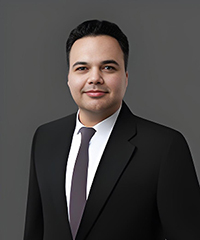
Muhammad Junaid
Associate Professor, China University of Mining and Technology, China.
Research field: Short-Circuit Current, Current Limitations, Fast Switching, Rated Voltage, Short-Circuit Fault, Electric Aircraft, Electric Field Strength, Electrode Gap, Electrode Geometry, Electrode Materials, Power System.
Muhammad Junaid (Senior Member, IEEE) received the Ph.D. degree in electrical engineering from the School of Electrical Engineering, Xi'an Jiaotong University, Xi'an, China, in 2020. Since late 2020, he has been serving as an Associate Professor at the School of Electrical Engineering, China University of Mining and Technology, Xuzhou, China. Previously, he was a Research Fellow at King's College Aberdeen, University of Aberdeen, Scotland, and a Lecturer in Power Engineering at the Department of Electrical Engineering, Sarhad University of Science and Information Technology, Pakistan. He has been involved in ten funded projects, presiding over eight of them, holds 11 patents, and 56 publications. His research focuses on alternatives to the SF6 gas and key technologies for fault current interruption, including vacuum interrupters, cryogenic dielectrics, and high voltage insulation. Dr. Junaid He is a member of the Chinese Society of Electrical Engineering (CSEE), the European Society for Applied Superconductivity (ESAS), and IAENG Hong Kong, and a life member of the Pakistan Engineering Council (PEC).
-
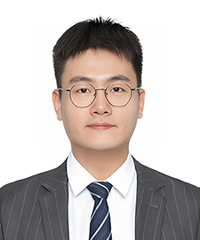
Hao Lu
Associate Professor, Xidian University, China.
Research field: Wide Bandgap Semiconductor Devices, Key Technologies for Heterogeneous Integration of Gallium Nitride, Key Processes for Compound Semiconductors.
Hao Lu received the received the Ph.D. degree in School of Microelectronics from Xidian University, Xi'an, China. He is now an Associate Professor of Xidian University. His research interest is GaN-based microwave/millimeter wave electronic devices and key technologies of heterostructure integration. He has published more than 60 technical papers in IEEE IEDM, IEEE Electron Devices Letters, IEEE Transactions on Electron Devices, Applied Physics Letters, Science China-Information sciences. etc., including 26 first-author publications. He holds 33 chinese patents (12 Granted patents). Has made several oral/invited presentation at international conferences such as IEDM, IEEE WiPDA, IEEE ICTA, IWN, APWS, etc. He won the IEEE WiPDA-Asia Best Presentation Award, AMSE Best Presentation Award, Best Researcher Award, the first xinyuan science and technology innovation award, and Xidian Excellent Doctoral Dissertation Funding and other awards. He serves Guest Editor at Micromachines Journal, Editor Committee of JEEE. He is IEEE Member, and member of the China Institute of Electronics.